 Scientific Bulletin – Automotive Series
Scientific Bulletin – Automotive Series
Scientific Bulletin – Automotive Series
Year XXXI, Volume 35
Robert Marian POPA, Adrian CLENCI, Victor IORGA-SIMĂN, Rodica NICULESCU
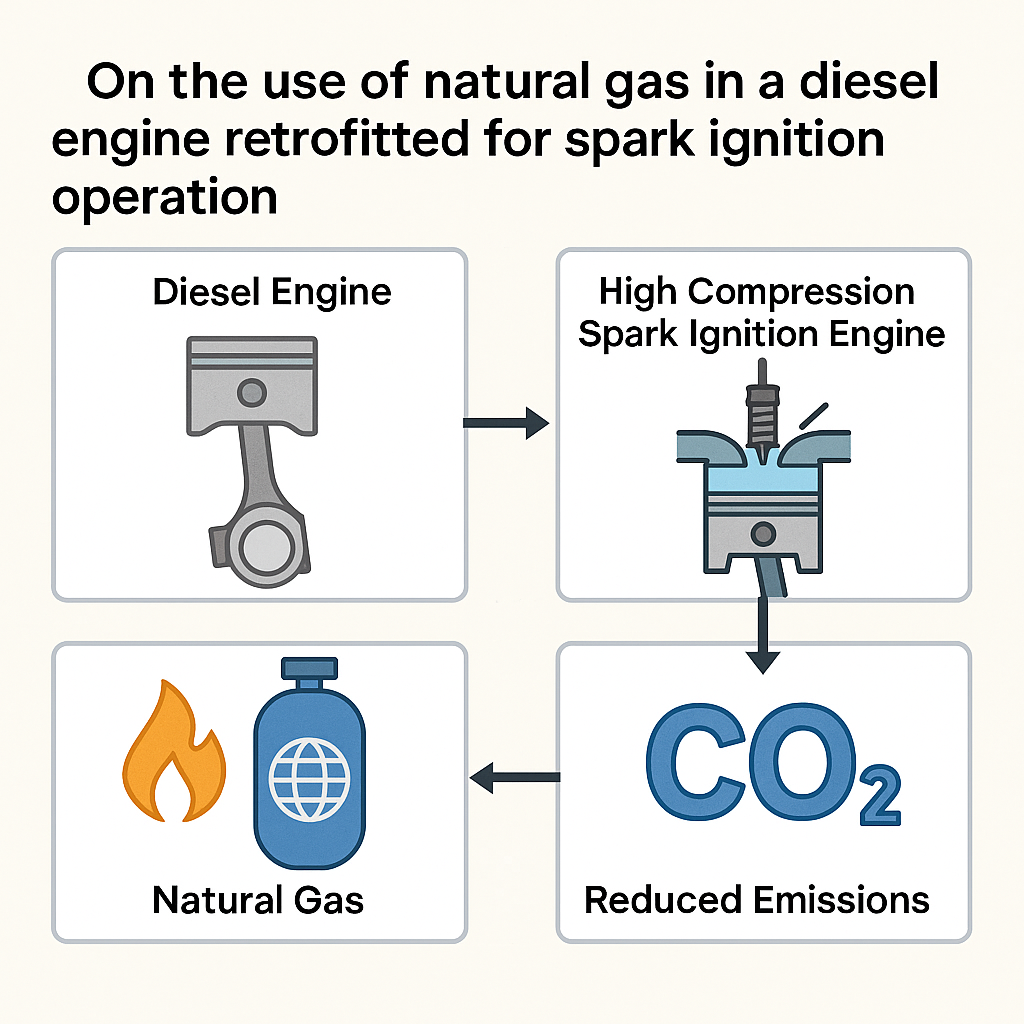
The problem of global warming is becoming an increasingly intense concern for all industries. In order to limit the increase in temperature to 1.5°C by 2030, according to the Paris agreement of 2015, humanity should reach zero CO2. Among the alternative fuels available now, methane gas is considered to be one of the best substitutes for fossil fuels.The main problem in using the methane gas as fuel is missing of an exclusive optimisation of the engines due to compromise in bi-fuel operations.The paper will present the engine prototype, its adaptation on a vehicle, aiming to be tested on the roller bench for emissions, as well as experimental results obtained at the engine test bed showing a comparison with a standard commercial gasoline engine.
Keywords:Natural gas, methane, CO2 emissions, spark ignition, sustainability
Maria-Magdalena DICU, Daniel-Constantin ANGHEL
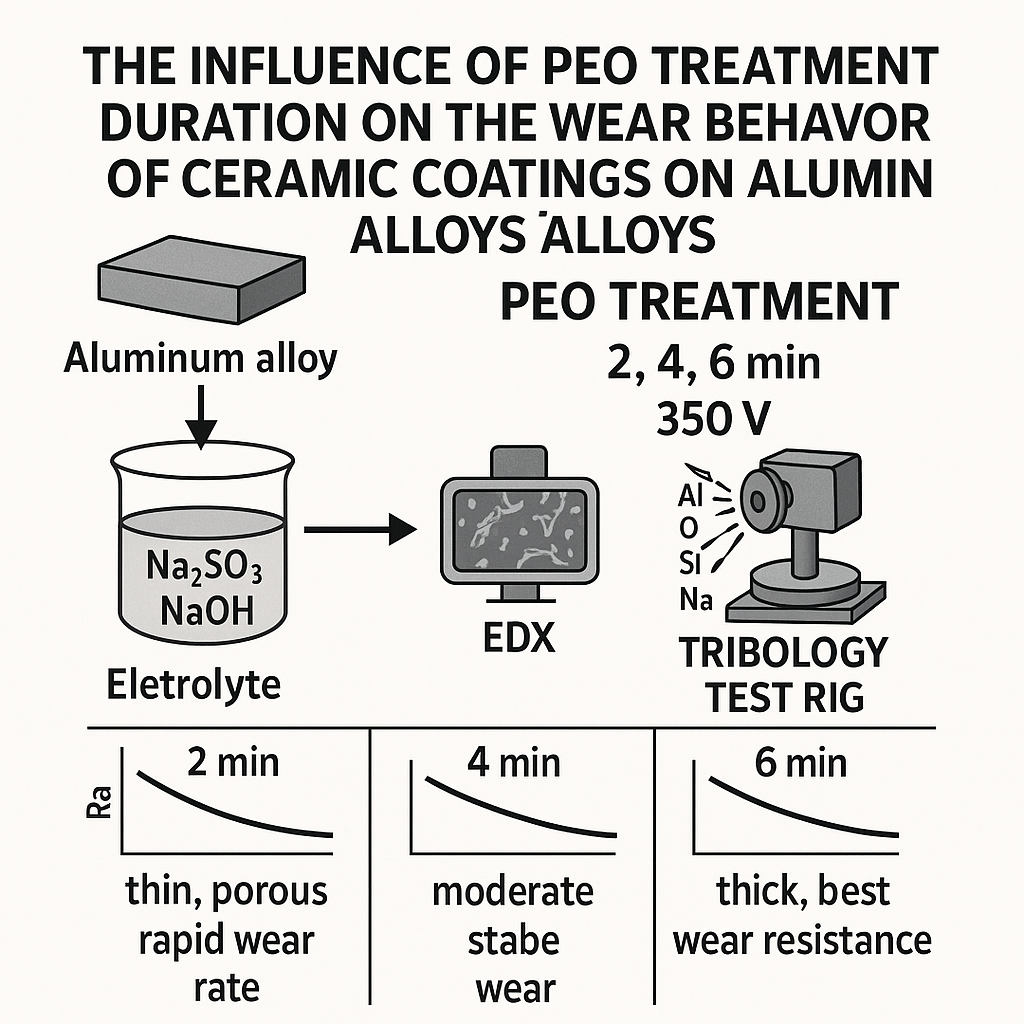
This paper presents the development and characterization of ceramic coatings obtained by Plasma Electrolytic Oxidation (PEO) on aluminum alloys. The electrolyte used is a mixture of sodium metasilicate (Na₂SiO₃) and sodium hydroxide (NaOH). The resulting surfaces were characterized using Scanning Electron Microscopy (SEM), Energy Dispersive X-ray Spectroscopy (EDX), and tribological testing. Additionally, correlations between structure and performance were discussed.
Keywords:PEO, coatings, surface analysis, tribological testing
Razvan UNGUREANU, Andreea TINTATU
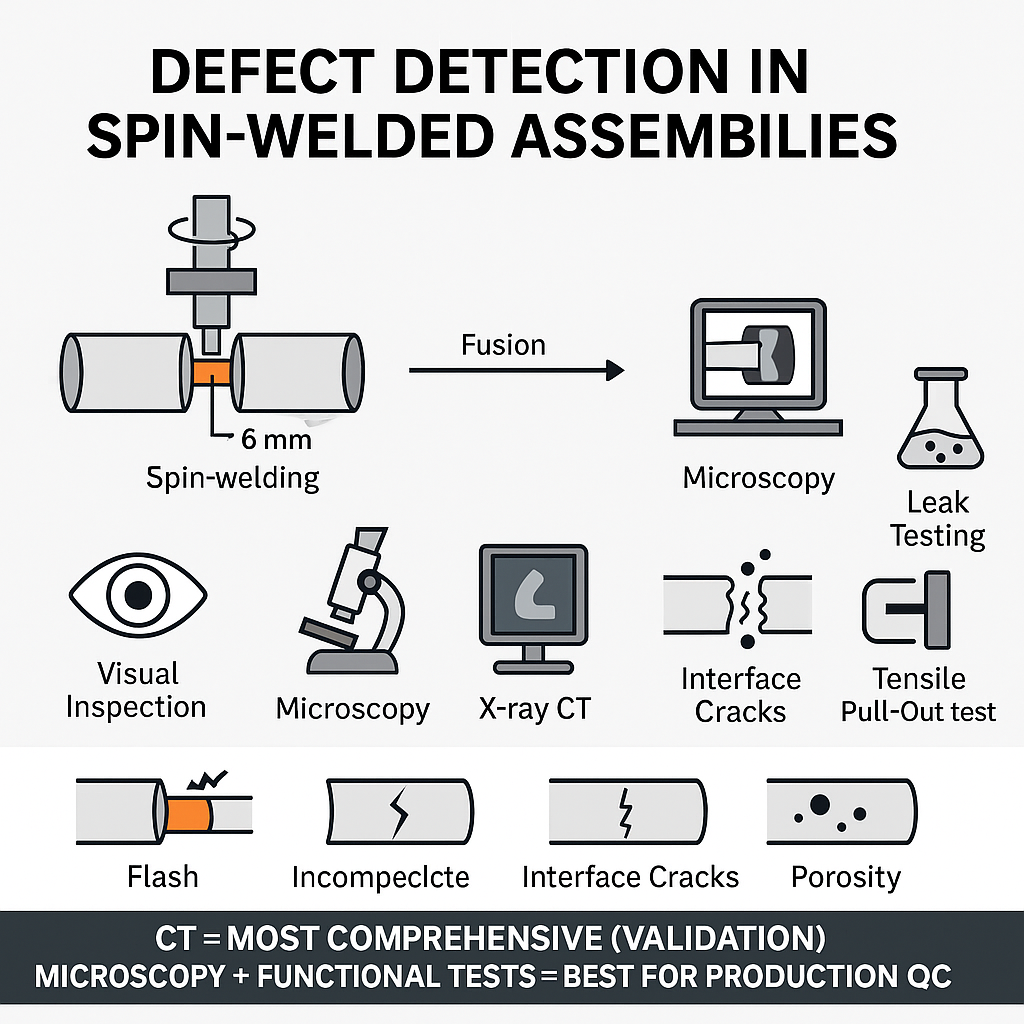
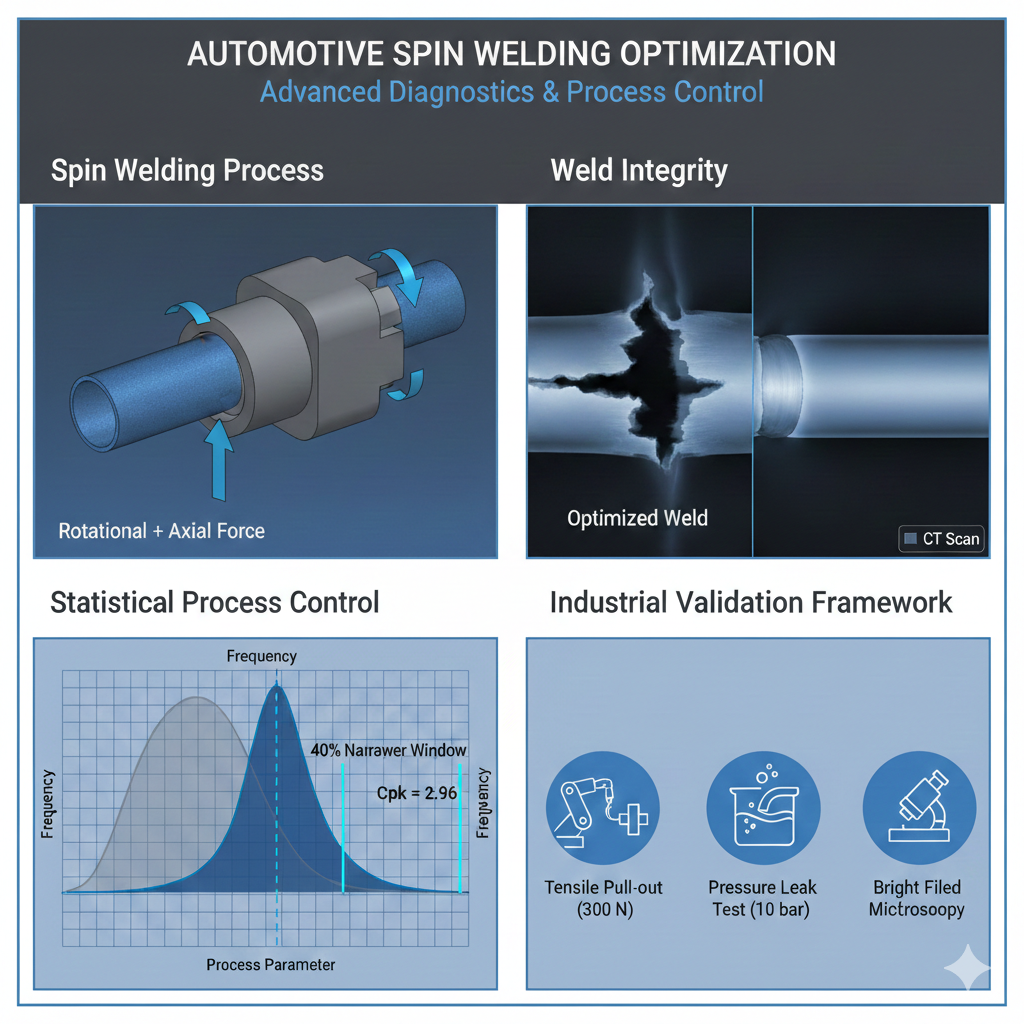
Spin Welding (SW) is a solid-state joining process widely used for thermoplastic components in automotive fluid transfer systems, offering high mechanical strength, sealing integrity, and full process traceability. However, due to the internal location of the weld interface, conventional optical inspection methods cannot be applied, making defect detection challenging. This study investigates defect detection and characterization in SW tube–connector assemblies, focusing on applications in safety-critical automotive environments. Assemblies were produced using a Mecasonic 72 horizontal SW machine, with process parameters established through Design of Experiments (DOE). A comprehensive evaluation methodology was applied, combining external visual inspection, bright field and polarized light microscopy, X-ray computed tomography (CT), leak testing, and tensile pull-out testing. The analysis identified common defect types, including flash formation, incomplete fusion, interface cracks, and porosity, and correlated their occurrence with deviations in welding time, displacement, and energy input. CT scanning proved most effective for complete circumferential defect mapping, while a combination of bright field microscopy and functional tests was deemed more practical for production environments. The findings provide a technical foundation for subsequent optimization of SW process parameters to reduce or eliminate defect occurrence.
Keywords:Spin Welding, thermoplastic welding, defect analysis, computed tomography, leak testing, automotive fluid transfer
Razvan UNGUREANU, Andreea TINTATU
Abstract:Ensuring the integrity of thermoplastic tube–connector joints is essential for the reliability and safety of automotive fluid transfer systems. This work focuses on defining and optimizing spin welding parameters to minimize defect occurrence and guarantee consistent joint quality. A Design of Experiments (DOE) approach was applied on a Mecasonic 72 horizontal welding machine, testing 20 parameter sets across 200 assemblies. Results showed that only 25% of the initial parameter sets fulfilled all acceptance criteria, underlining the narrowness of the unoptimized process window. To address this, Taguchi’s loss function was combined with statistical capability studies (Cp, Cpk) performed on 100 production samples, leading to optimized parameter ranges with tolerance intervals reduced by nearly 40%. The optimized process demonstrated high robustness, with capability indices significantly above automotive requirements (Cpk ≥ 1.67). Validation through tensile pull-out tests, leak testing, and light microscopy confirmed the elimination of defects such as incomplete fusion, excessive flash, and cracks. The proposed framework provides a reliable methodology for achieving defect-free spin-welded joints, offering both statistical rigor and industrial feasibility for large-scale automotive production.
Keywords:Spin Welding, thermoplastic welding, process optimization, Design of Experiments, statistical process control, automotive fluid transfer.

Maria-Rafaella ȘERB, Daniel-Constantin ANGHEL
Abstract:Additive Manufacturing (AM) enables high levels of customization and flexibility in modern production systems. At the same time, the transition toward Industry 5.0 introduces a human-centered and sustainable manufacturing paradigm. This paper reviews the integration of artificial intelligence (AI), particularly machine learning (ML), with AM processes, highlighting the role of human–machine collaboration. The study identifies a key research gap: the lack of integrated frameworks combining AM, AI, and human-centered design. A conceptual model for intelligent and adaptive manufacturing systems is proposed, aligned with Industry 5.0 principles
Keywords:Additive Manufacturing, Artificial Intelligence, Human–Machine Collaboration, Industry 5.0, Human-Centered Design
Ana-Maria APOLOZAN, Rodica NICULESCU, Adrian CLENCI
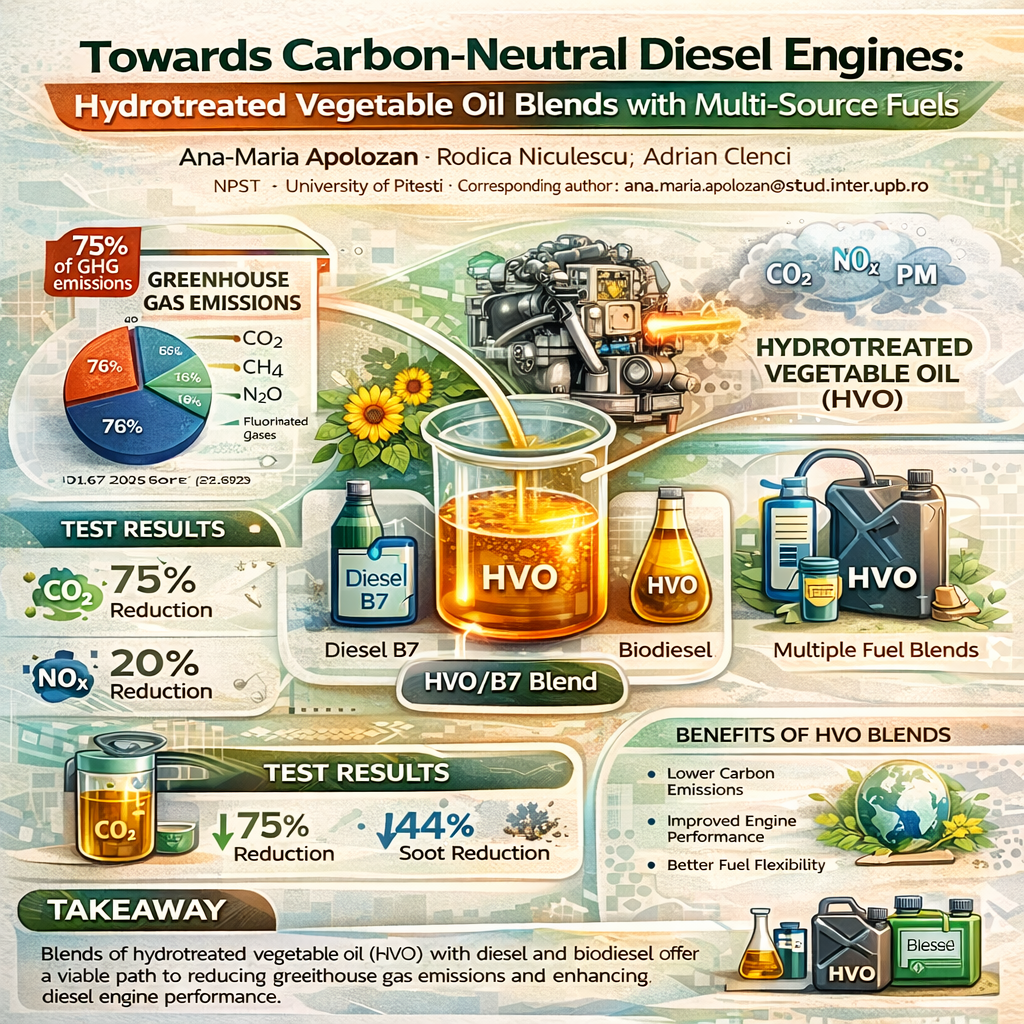
Abstract:The current issue related to pollution and the occurrence of extreme physical phenomena caused by global warming have forced society to search for diverse solutions and methods aimed at improving the quality of life on Earth. In response to the escalating problems of global warming and air pollution, international authorities have implemented several global measures, among which the “Paris Agreement” represents an initiative to limit the increase in temperature to 1.5°C by 2030. Among all the alternative fuels available now, hydrotreated vegetable oil - HVO is one of the best substitutes for fossil fuels. The paper will present the existing fuel blends between HVO, commercial diesel B7 and biodiesel used in internal combustion engines, as well as their experimental results created to reach the sustainability goal.
Keywords:Pollution, sustainability, global warming, HVO, fuels.
Adrian PREDA, Cristina-Florena BANICA, Daniel-Constantin ANGHEL
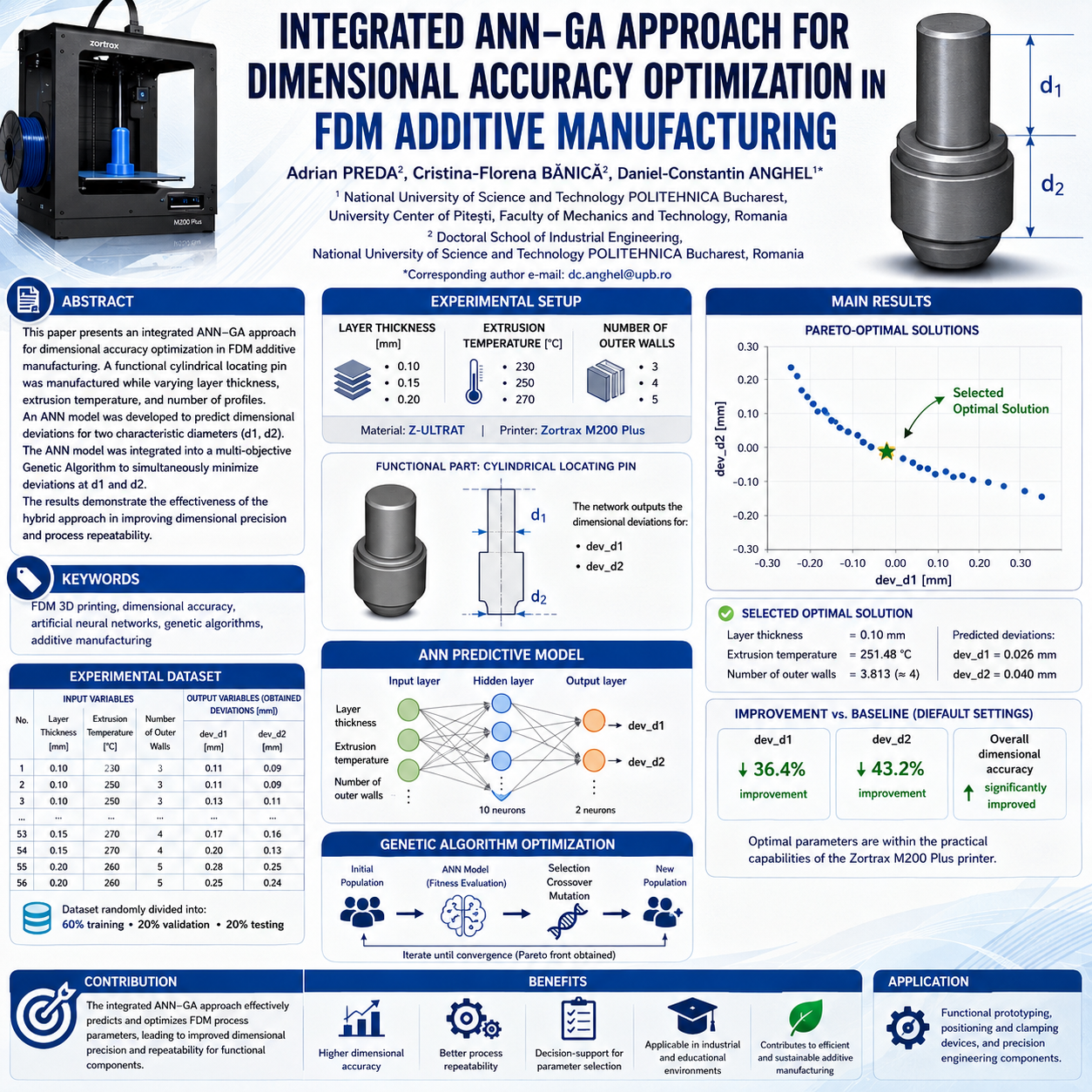
Abstract:This paper presents an integrated approach based on Artificial Neural Networks (ANNs) and Genetic Algorithms (GAs) for dimensional accuracy optimization in Fused Deposition Modeling (FDM) additive manufacturing. As additive manufacturing technologies are increasingly adopted in functional prototyping and engineering applications, dimensional accuracy becomes a critical requirement for ensuring component performance and assembly reliability. The study is based on the experimental manufacturing of a functional cylindrical locating pin prototype used in positioning and clamping devices. The selected geometry enables an accurate investigation of the influence of process parameters on dimensional behavior in functionally relevant areas. Experimental specimens were manufactured using Z-ULTRAT material on a Zortrax M200 Plus 3D printer while varying layer thickness, extrusion temperature, and number of profiles. Based on the experimental dataset, a predictive model was developed using a multilayer perceptron artificial neural network capable of estimating dimensional deviations for different combinations of process parameters. The ANN model was trained, validated, and tested using independent datasets, and its performance was evaluated through correlation coefficients and mean squared error values. Subsequently, the ANN model was integrated into a multi-objective optimization framework based on genetic algorithms in order to simultaneously minimize dimensional deviations corresponding to two characteristic diameters of the component. The optimization process generated a Pareto-optimal solution set highlighting the trade-offs between the considered objectives and providing a decision-support framework for selecting optimal manufacturing parameters. The obtained results demonstrate the effectiveness of the hybrid ANN–GA methodology in modeling and optimizing FDM processes, contributing to improved dimensional precision and enhanced process repeatability. The proposed methodology has applicability in both industrial and educational environments, supporting the development of intelligent additive manufacturing strategies.
Keywords:FDM 3D printing, dimensional accuracy, artificial neural networks, genetic algorithms, additive manufacturing